In short
A customer types or says who to pay and how much. Rendel reads the payee and the account from your API, shows a confirmation card with the amount and the recipient, and calls your transfer endpoint as that customer only after they tap yes.
How it works
The transfer is one of your actions, marked as a write. Rendel fills its parameters from what the customer said and from your own data, validates them against the action's schema, and stops at a confirmation card.
The card is built by Rendel's server from your action's template, so the model never words what the customer is agreeing to. If the customer declines or does not answer, nothing is sent.
expired is the one apps forget: it is decided on the server, ten minutes on, to a card the user may still be looking at.In Corvo, a demo app
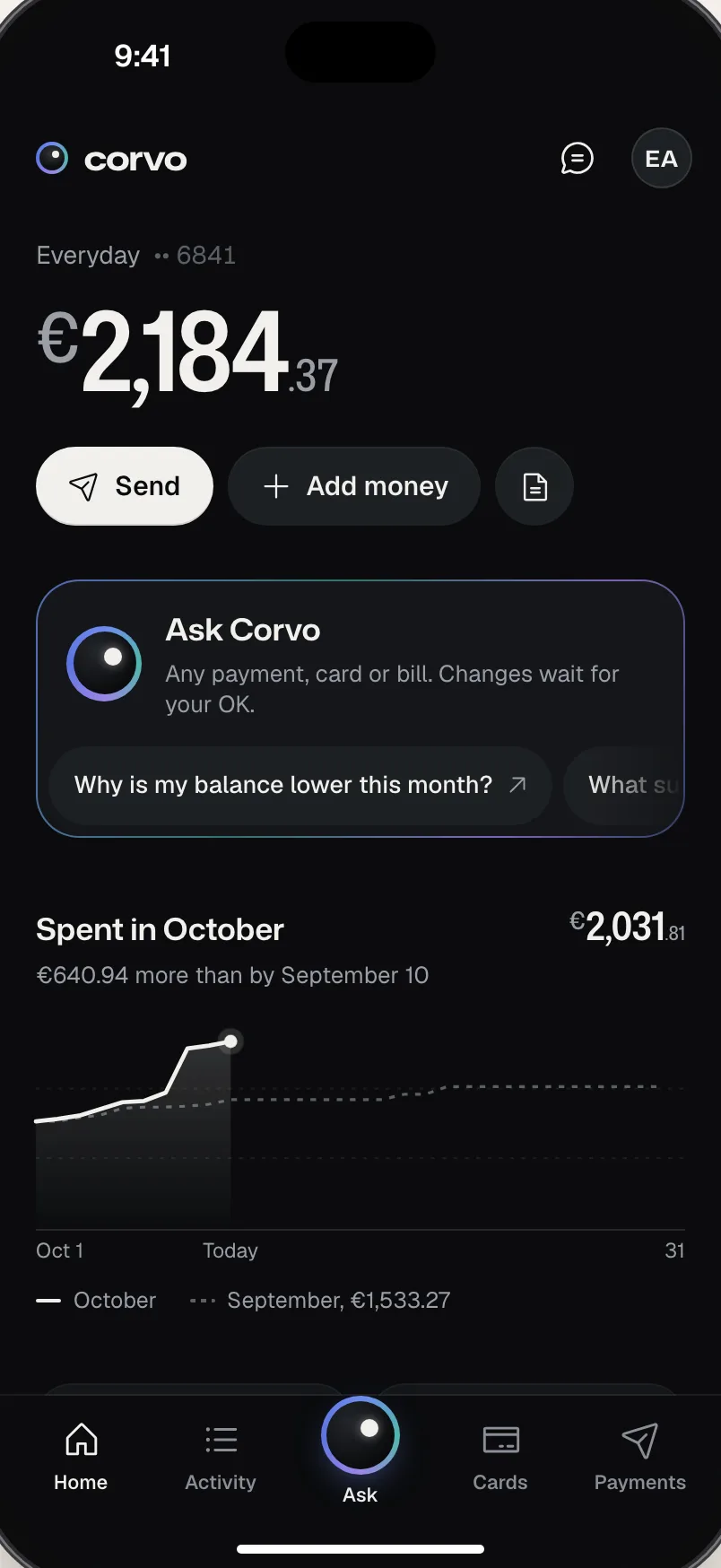
Asked: “Send €120 to Deniz for dinner”
Answered: Send €120.00 to Deniz Kaya?
After the tap: €120.00 sent to Deniz. It's already in Deniz's account. Your Everyday balance is now €2,064.37.
Questions
The signed-in customer's own token, so your API's limits and checks apply exactly as they do in the app.
Yes. Each action is kept with the conversation: when, the parameters, who confirmed it and what came back.